Looking for the Edges: Ambit Photographies from Scotland 2019
Ambit: Photographies from Scotland is a collaborative exhibition between Street Level Photoworks (Glasgow) and Stills (Edinburgh); Scotland’s two dedicated centres for photography. Both venues have enjoyed landmark anniversaries in recent years, with Stills celebrating their 40th anniversary in 2017 whilst Street Level are gearing up to celebrate their 30th anniversary later this autumn and it is fitting that these celebrations are punctuated by this joint-exhibition. Given the turbulent political climate we currently find ourselves in, Ambit is deliberately internationalist in its outlook - any artist who chooses to make their life and practice here in Scotland is embraced with open arms. It is an important point of distinction that this is a survey of contemporary photography from Scotland rather than an exhibition of contemporary ‘Scottish’ photography, per se. Just as many would like us to close ourselves off from our European neighbours, Ambit serves as a reminder of the important cultural contribution made by those who have chosen to make these islands their home. This is perhaps most obvious at Street Level Photoworks where each of the exhibiting artists has direct links outwith Scotland, and indeed some of the artist’s address this tension directly.

Other White by Polish-born, Glasgow based artist Edyta Majewska is a powerful, emotive installation born out of her own experiences and anxieties about life in Post-Brexit Britain. Like many Eastern European nationals living in the UK, Majewska has experienced the racism and xenophobia that Brexit has given rise to. Taking the referendum vote as her starting point, Majewska filmed herself cleaning the polling booths at the school where she worked on the day before the vote; meanwhile Nigel Farage’s ‘victory’ speech fog horns in the background. Alongside is a collection of family snapshots made throughout her fourteen-year stay in the UK. Majewska transforms these vernacular images into a set of sprawling, hypnotising wallpapers pasted to the gallery walls - the true content of which only reveal themselves under the scrutiny of a magnifying glass. There are also incidental polaroid snapshots made by the artist and those close to her, each bearing a note from its maker - messages of hopes, fears and sobering realisations of what might yet come to pass. Other White addresses the duality and anxiety of being a foreign national in an increasingly dis-United Kingdom head on. Safe to say, the cruel irony of preparing the polling place where her future would be decided; without her say so, has given rise to an important and powerful body of work.
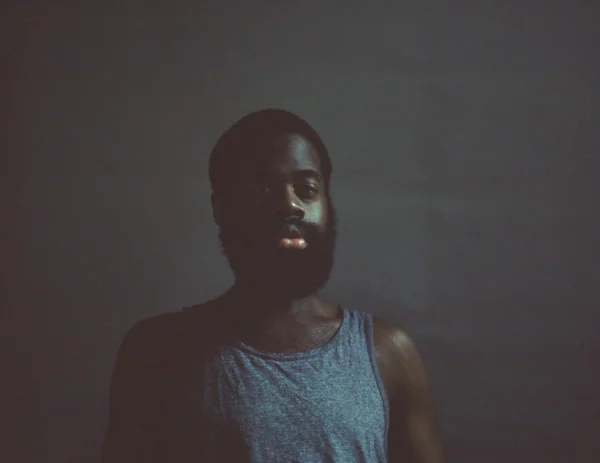
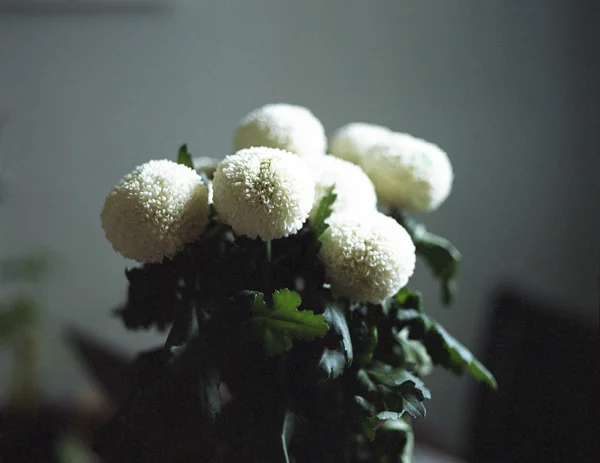
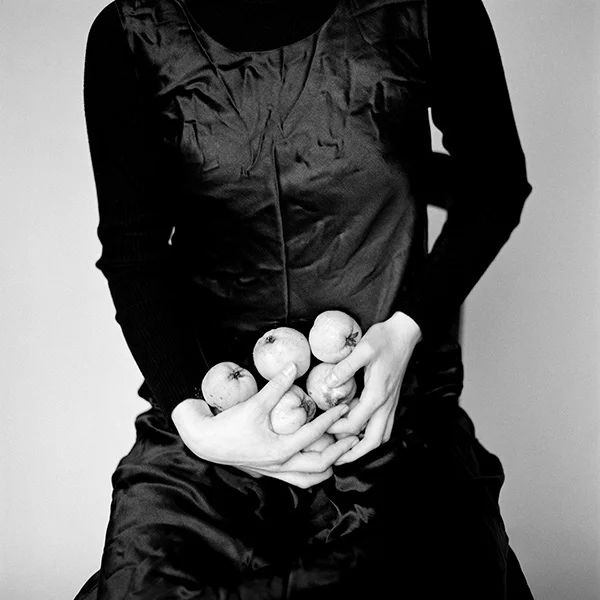
Alienation and hostility are themes shared in the work of Matthew Arthur Williams. In Conflict is an ongoing collection of subtle and often fragmentary portraits; borne out of the experience of being defined as ‘other’ - an experience shared between the artist and his sitters. This act of othering is drawn across many lines, be that of race, gender, sexual orientation or religion. Williams’ delicate photographs articulate this through his performative series of still lifes and portraits of peers, often obscured or merely glanced by his lens. This performative approach and sense of mystery is shared in Katy Hundertmark’s Studies in Gravitation; also on show Street Level. Hundertmark’s self-portraits were made during a prolonged stay at her family’s abandoned farm in Germany. The photographs record Hundertmark’s attempt to reconnect with her ancestors and the lost traditions of tending the family land. This has culminated in a series of images rife with the potent symbolism of memories. Farming tools are repurposed to become abstract sculptural objects, whilst Hundertmark herself is photographed being consumed by the freshly tilled land. The image of the artist’s arms laden with a crop of quince is particularly moving as Hundertmark re-enacts the toil of past generations by harvesting fruit that would ordinarily be left to rot. These photographs are a deeply personal ode to the land of her ancestry and a previous way of life, offering a momentary repose to the overwhelming automation and instant-gratification of modern life.


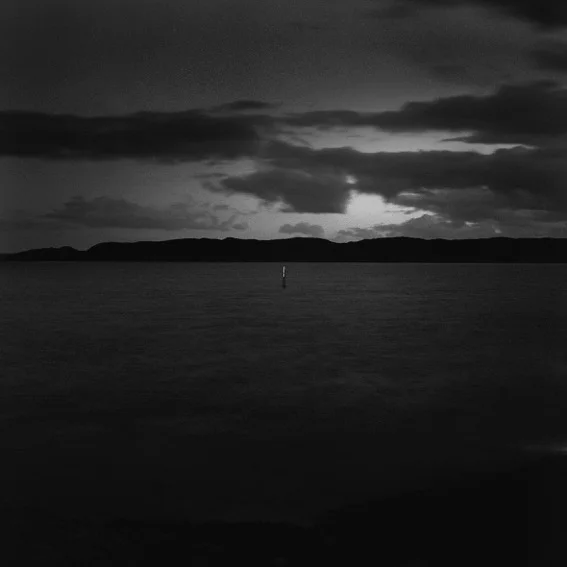
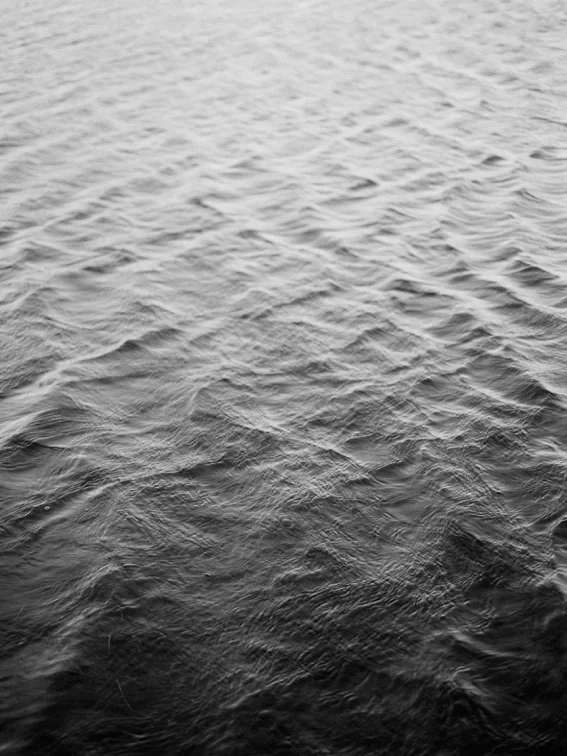
Reconnection and memory are at the core too of Mhairi Law’s The Darkest Dawn, marking the centenary of the Iolaire disaster. Law photographed the treacherous ‘Beasts of Holm’ - a stretch of rocks on which 200 men drowned in 1919 as the HMY Iolaire sank on its return voyage to Stornoway following the end of the First World War. The photographs; made as first light breaks over the Isle of Lewis, are dense and ominous. Law’s depiction of the inky depths slowly reveal a faint needle-like marker in the bay as the new dawn rises - a poignant tribute to a desperate tragedy. Also on show at Stills is Undertow; Frances Scott’s collection of black and white images made during walks around her native Orkney. There is a palpable connection to the land that resonates through Scott’s images, which is complemented by her drawn maps charting her circumnavigation of the Orcadian archipelago. Her drawings trace her meanderings around the islands, recorded in hours and minutes and punctuated with field notes from each journey. Scott’s oblique landscape studies reign in the wilds of the North Sea and Orkney’s rugged coastlines, whilst her drawings offer viewers a direct insight into private moments and memories. The culmination of which results in an evocative lyrical study of place that is as much about poetry and the performative act as it is about photography.
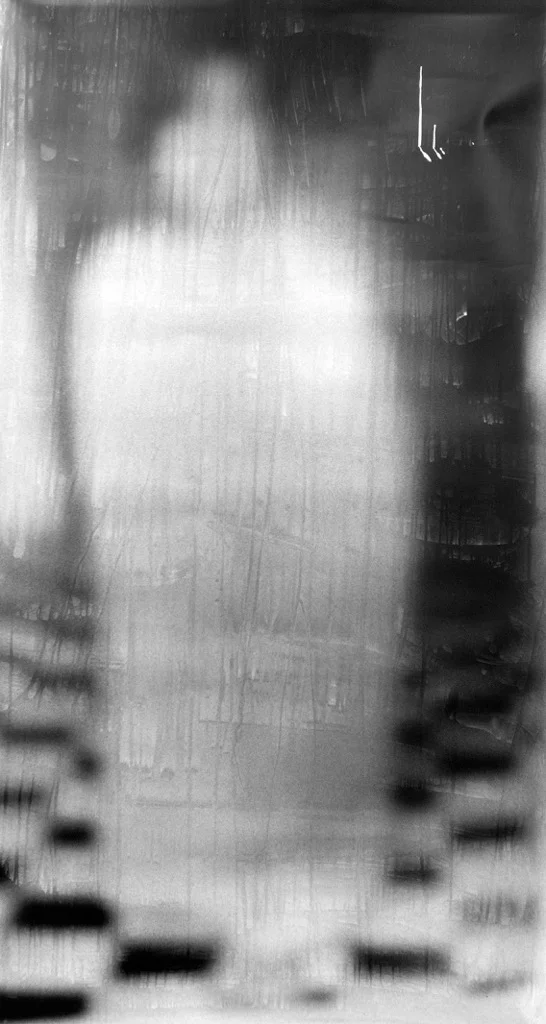
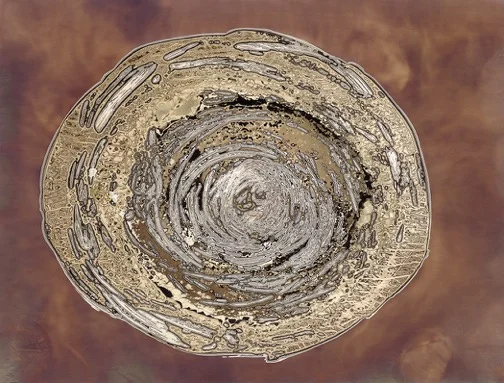
Performance is at the core too of Csilla Kozma’s gothic collection of self-portraits on show at Street Level. Kozma’s unique and ethereal series of Mordançage silver gelatin prints exist at the intersection of photography and printmaking. The performative nature of the images are unmissable, both in terms of subject and process. There is an innate theatricality woven throughout the pictures; as Kozma adopts the roles of both director and muse. With each image the artist reinvents herself as a cast of characters emerge that are haunting and surreal in equal measure. This highly orchestrated series of images highlights a Brechtian approach to picture making, revealing the artifice and mechanics of their production. Morwenna Kearsley’s large scale silver gelatin prints at Stills reveal the method of their making also. Her collection of monumental prints hang from the ceiling, each print bearing the physical traces and watermarks of their makers hand. This sense of touch and process is central to Kearsley’s practice, forcing the viewer to physically navigate the narrow galleries past the hanging prints. They are both breathtaking in scale and captivating in the subtlety of their abstract, spectral depictions. The prints exhibit Kearsley’s painterly approach to picturemaking, pushing photography to its material limits. This experimental approach is shared by fellow exhibitor Brittonie Fletcher who; influenced by her time spent as Stills artist in residence in Orkney, utilises various forms of photographic processes. Fletcher’s smorgasbord of approaches range from traditional silver gelatin prints and C-Types to hand coated papers and chemigrams. Indeed it is her collection of chemigrams that are a particular highlight. These seemingly other-worldly images shift and change as the light-sensitive paper reacts to the gallery spotlights to create a series of organic images in a constant state of flux.
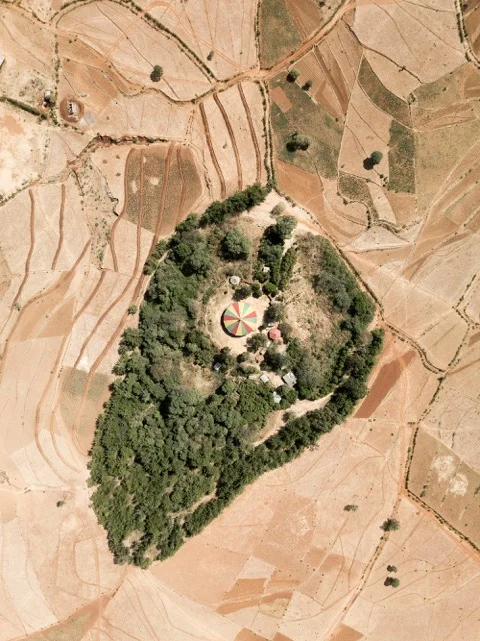
At Street Level, Iain Sarjeant’s series Out of the Ordinary offers a vision of a nation in flux; having spent the last few years making photographs across the length and breadth of Scotland. Sarjeants subject matter ranges from crashed cars in Ayrshire to snow-capped mountains in the Highlands and everything in between. Truly democratic in approach, he photographs the mundane and absurd nature of contemporary Scottish life with vigour. His ongoing collection of photographs serve as a study of the Anthropocene, where even the most remote and scenic areas of the landscape bear the hallmarks of human intervention. Sarjeant’s photographs of the urban and post-industrial fringes are particularly interesting, with a typically Scottish ability to find beauty and black humour in even the most desperate and depressing of locations. Kieran Dodds’ Hierotopia offers viewers an insight into a very different locale; however, as he photographs rural landscapes around Tewahedo Orthodox churches in Northern Ethiopia. His series of subdued portraits and landscape studies offer a startling reminder of the huge ecological toll we are extolling on the planet. Dodds’ aerial photographs showing the stark reality of forest loss around the churches are devastating, as these places of worship stand as the last bastion of survival in an increasingly arid and depleted landscape. It is fitting then that Dodd’s images sit opposite Alex Hall’s series Trauma, which consists of close up studies of scrapped cars. These fragmentary images could be mistaken for abstract aerial landscape studies in their own right. Hall’s images offer us views of deserts of twisted, rusted metal and glaciers of smashed glass and concrete. The juxtaposition of Dodd’s and Hall’s work as you enter the gallery at Stills is immediate and striking.

It is clear from both exhibitions that contemporary photography in Scotland is in rude health. Ambit is not a survey of the photographic status quo but rather a celebration of the strength and diversity of picturemakers in Scotland at present. Conversations and parallels arise naturally between the works and across the venues, with one artist creating the context to better understand the work of the next. That Scotland’s only dedicated photographic galleries can come together to collaborate at a time of ever-increasing competition for audiences and funding is to be commended also; as this can only serve to cement the cultural importance of photography at home and at the same time help raise the profile of contemporary Scottish photography further afield.
Ambit: Photographies from Scotland is on show at Stills until June 2nd and at Street Level Photoworks until June 23rd.