Frank McElhinney: Mediating History
‘This is not history with a capital H...’ explains artist Frank McElhinney when we meet to discuss the role of history within his work. Such questioning seems an obvious place to start when addressing McElhinney’s practice. Projects have included investigations into the Battle of Bannockburn in 1314 and the legacy of the Highland clearances, as well as explorations of the Antonine Wall. It is unsurprising that many of his projects have a historical context given that his first degree was in Medieval and Modern History. However, merely retelling these stories through his photographs holds no interest; rather McElhinney uses such historical events as a catalyst to address contemporary issues. This is a distinction that he himself makes clear when he describes his practice and research interests as historiographical rather than being about historical events. By using the past as a starting point, he makes the proposition that we can use history as a means of ‘contextualising the present day in order to come up with radical solutions for the future.’
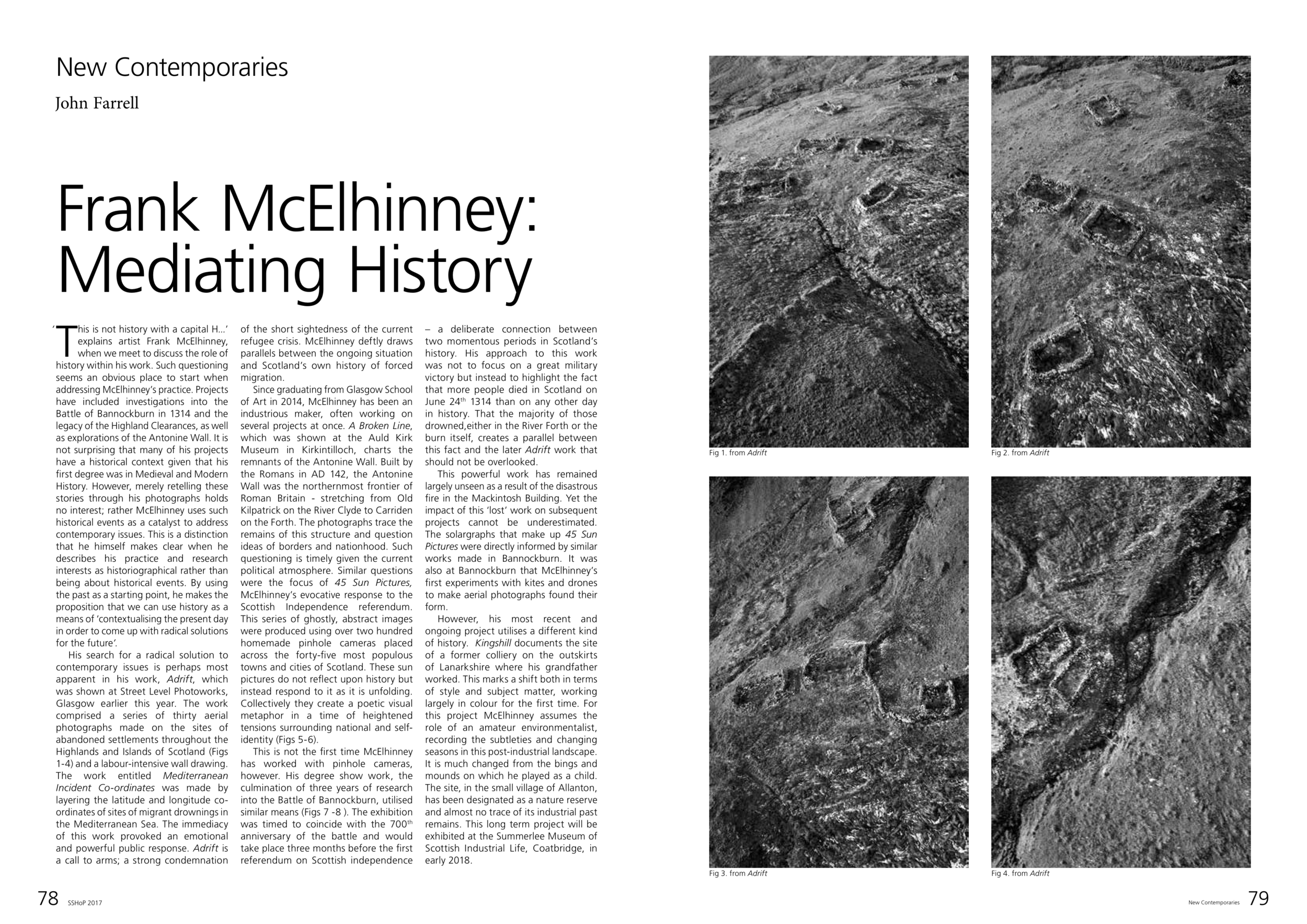
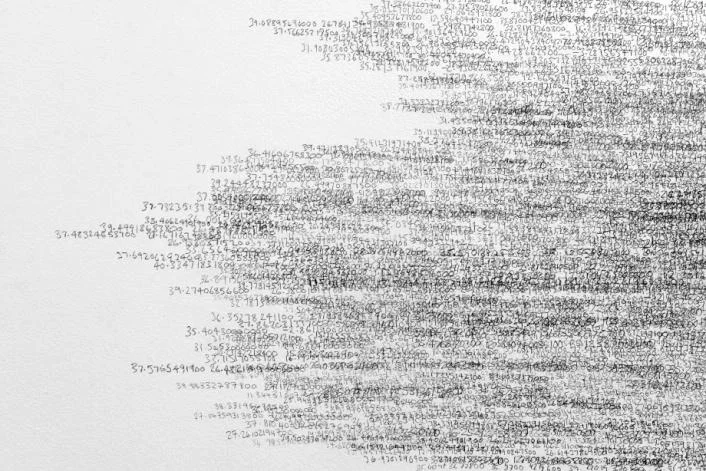
His search for a radical solution to contemporary issues is perhaps most apparent in his work, ‘Adrift’, which was shown at Street Level Photoworks, Glasgow earlier this year. The work comprised a series of thirty aerial photographs made on the sites of abandoned crofts and settlements throughout the Highlands and Islands of Scotland and a labour-intensive wall drawing. The work titled ‘Mediterranean Incident Co-ordinates’, was made by layering the latitude and longitude co-ordinates of sites of migrant drownings in the Mediterranean Sea. The immediacy of this work provoked an emotional and powerful public response. ‘Adrift’ is a call to arms, a strong condemnation of the short sightedness of the current refugee crisis. McElhinney deftly draws parallels between the on-going situation and Scotland’s own forced migratory history.
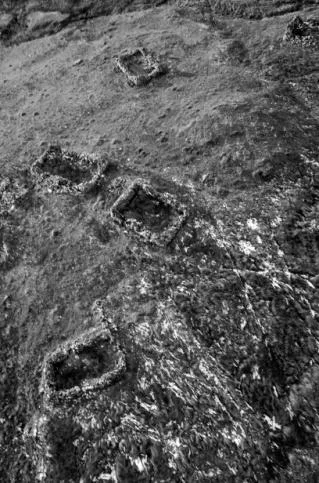
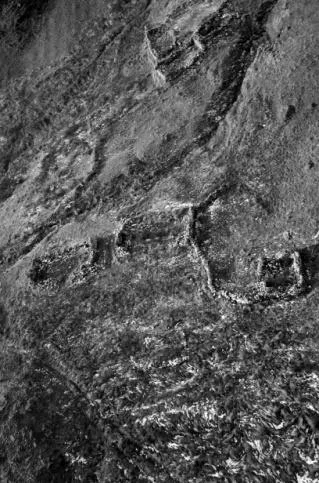
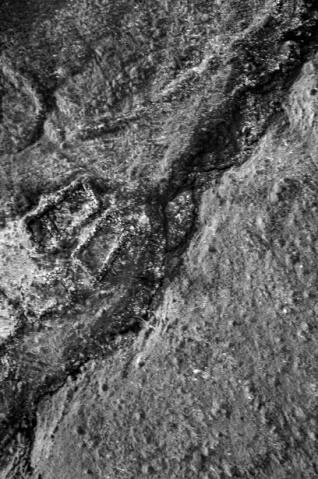
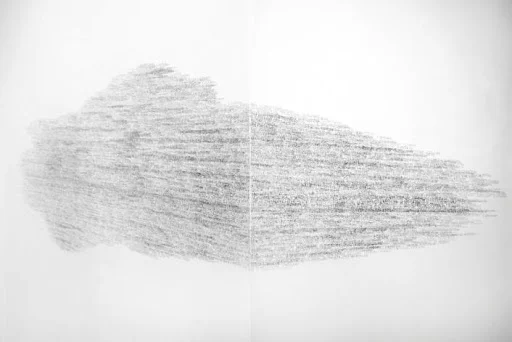
Quite often history can be used in a conservative or reactionary way. I’m for historical thinking rather revering the past. If you look at the rise of Trump, the fear of immigration - these are alarm bells that warrant looking back.
Since graduating from Glasgow School of Art in 2014, McElhinney has been an industrious maker, often working on several projects at once. ‘A Broken Line’, which will be on show at the Auld Kirk Museum in Kirkintilloch, charts the remnants of the Antonine Wall. Built by the Romans in AD 142, the Antonine Wall was the northern-most frontier of Roman Britain - stretching from West Kilpatrick on the River Clyde across to Carriden on the Forth. The photographs trace the remains of this structure and question ideas of borders and nationhood. Such questioning is timely given the current political atmosphere. Similar questions were the focus of 45 Sun Pictures; McElhinney’s evocative response to the Scottish Independence referendum. This series of ghostly, abstract images were produced using over two hundred homemade pinhole cameras placed across the forty-five most populous towns and cities across Scotland. These sun pictures do not reflect upon history but instead respond to it as it is unfolding. Collectively they create a poetic visual metaphor of a time of heightened tensions surrounding national and self-identity.
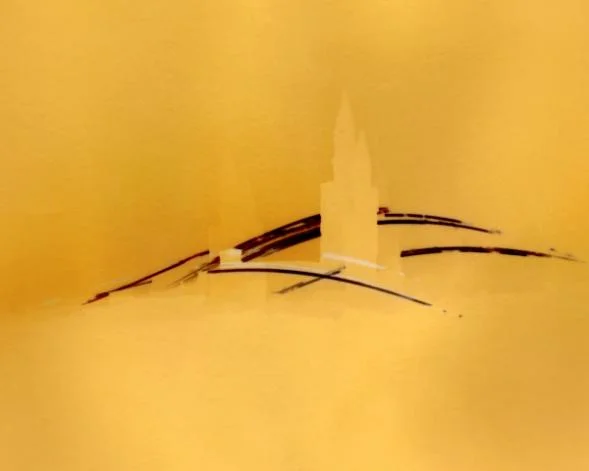
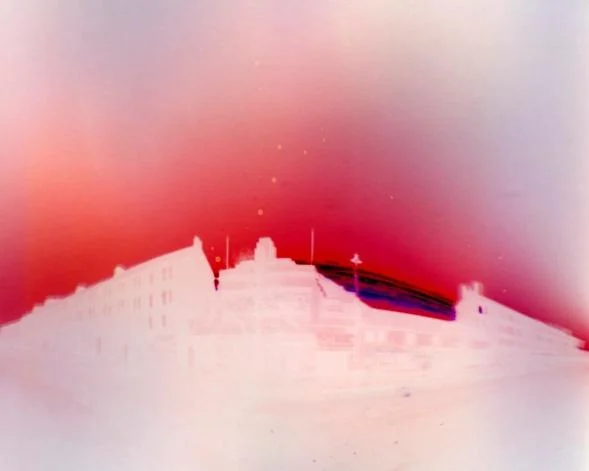
This is not the first time McElhinney has worked with pinhole cameras, however. His degree show work, the culmination of three years of research into the Battle of Bannockburn, utilised similar means. The exhibition was timed to coincide with the 700th anniversary of the battle and would take place three months before the first referendum on Scottish Independence – a deliberate connection between two momentous periods in Scotland’s history. His approach to this work was not to focus on a great military victory but instead centred on the fact that more people died in Scotland on June 24th 1314 than on any other day in history. That the majority of those drowned creates a parallel between this fact and the later ‘Adrift’ work that should not be overlooked.
The medieval chronicler Barbour describes thousands of people drowning in the River Forth and in the burn itself. He described the burn being so thick with dead bodies and dead horses that you could cross the burn without getting your feet wet.
This powerful work has remained largely unseen as a result of the disastrous fire in the Mackintosh Building. Yet the impact of this ‘lost’ work on subsequent projects cannot be underestimated. The solargraphs that make up 45 Sun Pictures were directly informed by similar works made in Bannockburn. It was also at Bannockburn that McElhinney’s first experiments with kites and drones to make aerial photographs found their form.
However his most recent and on-going project utilises a different kind of history. ‘Kingshill’ documents the site of a former colliery on the outskirts of Lanarkshire where his Grandfather worked. This marks a shift both in terms of style and subject matter, working largely in colour for the first time. For this project McElhinney assumes the role of an amateur environmentalist, recording the subtleties and changing seasons on this post industrial landscape. It is much changed from the bings and mounds on which he played on as a child. The site, in the small village of Allanton, has been designated as a nature reserve and almost no trace of its industrial past remain. This long term project will be exhibited at the Summerlee Museum of Industrial Life in Coatbridge in early 2018.